


The Distance Isn’t the Problem: How Higher Grounds Makes Virtual Coaching Work in Real Life
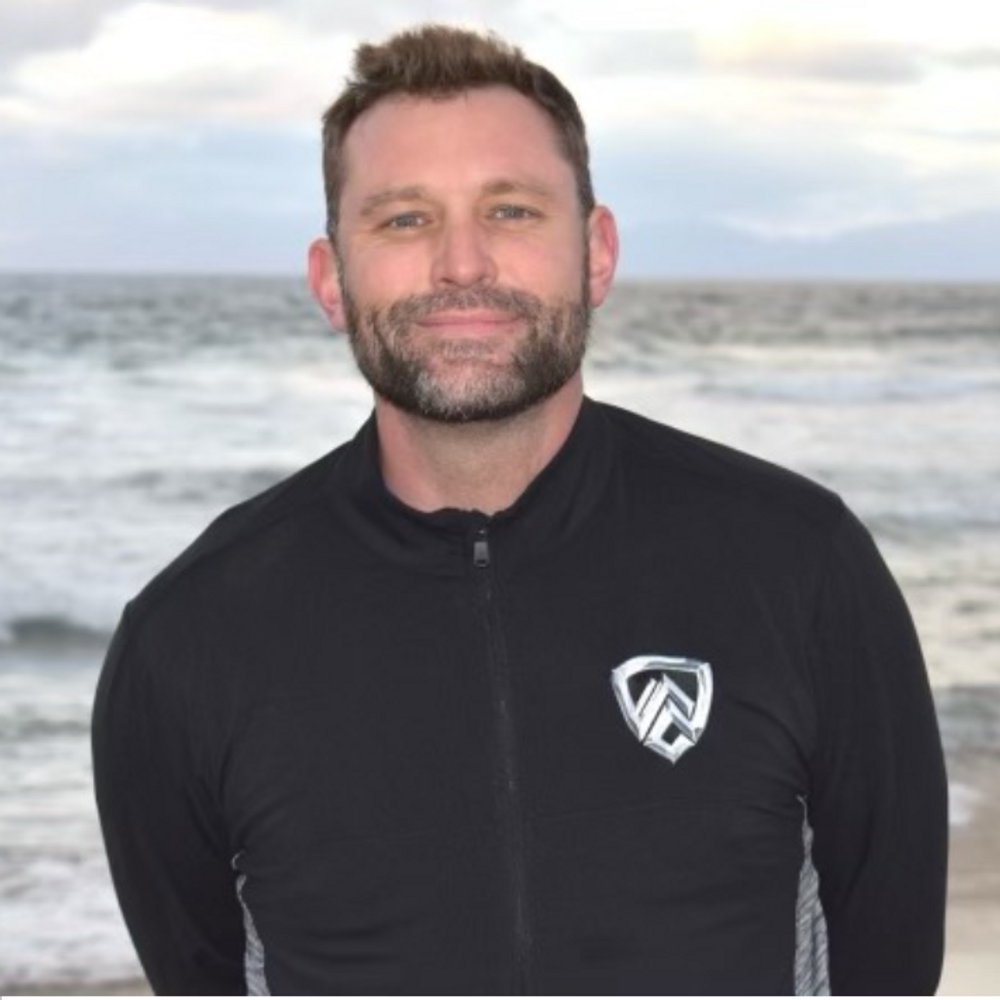
Written by Tynan “Coach Ty” Mason of Higher Grounds Management
Tynan “Coach Ty” Mason approaches virtual coaching at Higher Grounds Management by addressing a question that is frequently overlooked: What happens when the professional is no longer present? His approach begins by identifying the patterns disrupting a teenager’s daily functioning, establishing practical expectations with the family, and examining whether those expectations translate into consistent behavior between appointments. Distance does not eliminate accountability. Poorly structured support does.
For families struggling with school refusal, executive functioning, emotional outbursts, technology dependence, or deteriorating parent-child relationships, the effectiveness of remote coaching depends less on geographical proximity than on what changes inside the household.
Virtual support cannot physically organize a teenager’s backpack, resolve a confrontation, or ensure an assignment reaches the teacher. It can, however, help families develop the routines, communication strategies, and behavioral expectations needed to accomplish those tasks independently.
The essential difference is whether the conversation produces action.
A Video Call Is Not a Behavioral Intervention by Itself
An appointment can create the appearance of progress without producing meaningful change.
A teenager may speak thoughtfully about responsibility during a video session and continue avoiding responsibilities immediately afterward. Parents may agree to enforce boundaries but abandon them when resistance intensifies.
Neither necessarily indicates that the family is unwilling to improve. It may indicate that insight has not yet been translated into a repeatable process.
Coach Ty approaches this distinction by connecting specific problems with specific responses. If a teenager repeatedly misses assignments, the objective is not simply to discuss academic motivation. It is to determine where the process breaks down.
Does the teenager know what must be completed? Is there an established starting time?
Does the family provide excessive reminders? Does frustration lead to avoidance? Does the
parent eventually assume responsibility for finishing the task?
Each possibility suggests a different intervention.
Virtual coaching becomes useful when the family can identify these variables, practice a response, and evaluate the outcome.
The Household Is Where Progress Must Survive
Consider a hypothetical family whose sixteen-year-old son has developed a pattern of avoiding schoolwork.
His parents describe him as unmotivated. He describes them as controlling. Arguments begin whenever homework is mentioned.
Rather than attempting to settle the disagreement through competing interpretations, Coach Ty would examine the sequence surrounding the behavior.
The family establishes a predictable homework period. The teenager participates in identifying which assignments require attention. Parents agree on how reminders will be delivered and which responsibilities remain the teenager’s.
The family then observes what happens.
Perhaps assignments begin consistently on Monday and Tuesday but collapse on Wednesday. The useful question becomes what changed. Was there an unusually difficult assignment? A disrupted evening schedule? Insufficient sleep? An expectation that nobody communicated clearly?
This investigation makes the coaching process responsive rather than punitive.
The goal is not perfect compliance. It is a growing ability to initiate responsibilities, tolerate frustration, and recover when the routine fails.
Importantly, a teenager should participate in shaping expectations when developmentally appropriate. Accountability imposed without understanding or meaningful involvement may produce resistance without teaching judgment.
Parents Are Participants, Not Spectators
Virtual coaching often depends heavily on what caregivers do between meetings.
A parent may unintentionally reinforce an unwanted pattern by negotiating for forty minutes after announcing a boundary. Another may respond inconsistently because exhaustion makes maintaining expectations difficult.
The solution is not to blame parents for their teenager’s behavior. It is to recognize that the environment includes everyone who participates in it.
Through Higher Grounds Management, Coach Ty emphasizes clear instructions, realistic expectations, and responses that families can repeat without constant professional intervention.
A useful weekly plan might address one recurring conflict rather than attempt to restructure
the entire household.
Parents practice delivering an expectation without escalating. The teenager receives a reasonable opportunity to respond. Everyone understands what happens when the agreement is met or missed.
When the next session occurs, the conversation examines how that arrangement functioned—not merely how everyone felt about it.
This distinction is especially important in remote services, where the people living in the environment carry out much of the practical work.
Behavioral Expertise Adds Precision
The Higher Grounds team also includes Jose Juan “JJ” Bustamante, BCBA (Certification No. 1-11-9050; NPI No. 1023416039), whose behavioral expertise contributes an additional perspective on identifying observable patterns and examining the relationship between behavior and its surrounding conditions.
This allows the team’s practical discussions to move beyond vague labels such as laziness, disrespect, or poor motivation.
A measurable objective might involve reducing the number of reminders required to begin an assignment, increasing independently completed morning routines, or documenting successful school attendance.
These observations do not provide a complete psychological assessment. They offer concrete information that can make family decisions more informed.
Higher Grounds’ coaching and mentorship services must also remain distinct from medically necessary Applied Behavior Analysis, psychotherapy, psychiatric treatment, and other regulated clinical services. The presence of a BCBA does not automatically make every coaching interaction clinical ABA.
When a young person requires diagnostic evaluation, specialized treatment, or a higher level of care, appropriate professional referral and coordination remain essential.
What Research Actually Tells Us About Remote Parent Support
Research provides a reasonable foundation for technology-assisted family interventions, although the evidence requires careful interpretation.
Baumel et al. (2017) systematically reviewed technology-assisted parent-training programs targeting disruptive behavior in children and adolescents. Their findings identified promising applications of technology while highlighting differences across intervention formats, study quality, and outcomes.
A subsequent literature review by Morgan et al. (2024) examined digital behavioral parent-training programs designed for parents of adolescents. The authors identified a developing body of research but also substantial variation in program design, implementation, and evaluation.
Together, these studies suggest that remote delivery can serve as a legitimate method of providing certain forms of structured parent guidance.
They do not establish that all virtual coaching programs are equally effective or that digital services can replace in-person clinical treatment.
That distinction matters. Higher Grounds’ specific coaching approach should be evaluated through its own practices and functional outcomes rather than presented as an intervention independently validated by these studies.
Remote support also has practical limitations. Families facing immediate danger, acute psychiatric instability, significant safeguarding concerns, or needs requiring direct clinical observation may require different services.
Responsible coaching must recognize those boundaries.
The Evidence of Progress Appears Between Sessions
The most meaningful improvements may be surprisingly ordinary.
A teenager checks the assignment portal without being reminded.
A parent delivers an expectation without entering a prolonged argument.
A young adult attends an appointment they scheduled independently.
A family completes a difficult evening without allowing one disagreement to consume the remaining hours.
These observations deserve attention because they indicate that a new response is becoming available in an environment where the old pattern previously dominated.
Higher Grounds can examine progress through practical indicators such as assignment completion, school participation, family conflict, routine consistency, and independent task initiation.
The purpose is not to transform family life into an endless exercise in data collection. It is to distinguish observable improvement from temporary optimism.
A favorable coaching conversation is encouraging. A different Tuesday afternoon is more informative.
Technology Should Carry the Conversation, Not the Responsibility
Families considering virtual coaching often wonder whether a remote relationship can provide enough accountability.
The answer depends partly on what kind of accountability they expect.
A coach cannot be physically present for every difficult decision. Nor should permanent professional supervision become the objective.
Effective remote support instead establishes a structure in which responsibilities are understood, obstacles are identified, and families have opportunities to practice different responses.
Privacy, appropriate consent, realistic availability, and clear communication boundaries are also necessary. Virtual access should not be confused with unlimited crisis coverage.
The greatest advantage of remote coaching may be its ability to bring practical guidance into conversations about the very environments where difficulties occur.
Parents and teenagers can examine their actual calendars, school demands, household expectations, and communication patterns rather than discussing them exclusively as abstractions.
Geography affects service delivery. It does not eliminate the possibility of meaningful learning.
For families interested in structured virtual coaching, executive-functioning support, or parent guidance, Higher Grounds Management offers a free 15-minute consultation to discuss individual needs and the appropriate level of support.
Ultimately, the measure of remote coaching is not how connected a family feels during an appointment.
It is what they become capable of doing when the call ends.
References
Baumel, A., Pawar, A., Mathur, N., Kane, J. M., & Correll, C. U. (2017). Technology-assisted parent training programs for children and adolescents with disruptive behaviors: A systematic review. Journal of Clinical Psychiatry, 78(8), e957–e969. DOI: 10.4088/JCP.16r11063.
Morgan, M. H. C., Huber-Krum, S., Willis, L. A., & Shortt, J. W. (2024). A literature review of digital behavioral parent training programs for parents of adolescents. Prevention Science, 25(1), 155–174. DOI: 10.1007/s11121-023-01596-0.
Meaningful family progress should not depend on how close you live to professional support. If your household is struggling with accountability, routines, or getting positive changes to carry over into daily life, Higher Grounds can help you explore a more structured approach.
Take the first step and book a free 15-minute consultation with Higher Grounds Management to discover how virtual coaching could support your family's needs.


