


Can Parent Coaching Help a Teen With Anxiety at Home?
Updated: 3 days ago
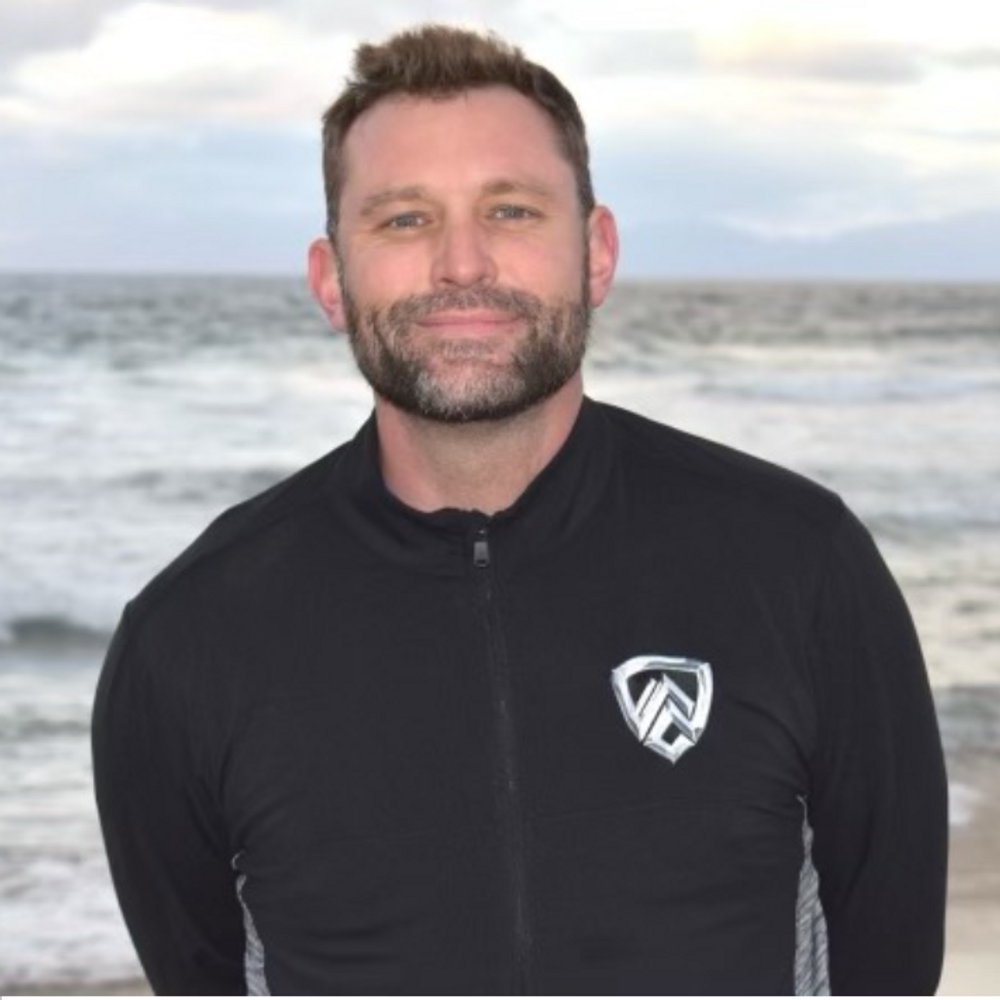
Written by Tynan Mason of Higher Grounds Management
Anxiety rarely stays inside the therapy office. It appears when a teenager will not get out of the car at school, avoids an assignment because failure feels unbearable, repeatedly asks a parent for reassurance, stays awake scrolling to escape uncomfortable thoughts, or abandons responsibilities whenever distress rises. This is where Coach Ty and Higher Grounds Management can be useful: not by replacing specialized anxiety treatment, but by helping parents build the daily routines, accountability, communication, and follow-through that allow clinical recommendations to function in real life. A therapist may treat the anxiety.
Higher Grounds helps the family think carefully about what happens around it every morning, afternoon, and evening.
Higher Grounds’ Back On Track Digital E-Course provides families with additional structure around routines, screens, accountability, and executive functioning.
Anxiety Can Quietly Reorganize the Family
Parents naturally want to reduce their child’s distress.
That instinct becomes complicated when relief begins requiring the entire household to change around the anxiety.
A parent emails the teacher because the teen is afraid to ask for help. Another repeatedly allows school absences after difficult mornings. Social plans are canceled. Parents provide reassurance until midnight. Responsibilities disappear whenever anxiety becomes intense.
Each decision may feel compassionate in isolation.
But over time, the teenager can begin receiving an unintended lesson: when anxiety becomes strong enough, life moves out of its way.
The Child Mind Institute explains that avoidance may reduce anxiety temporarily while reinforcing it over time. Its guidance also emphasizes that parents can acknowledge distress while communicating confidence that a child is capable of tolerating uncomfortable feelings. Child Mind Institute
That distinction is critical to Coach Ty’s work.
Support should help a teenager move through difficulty—not automatically remove every difficult thing.
The Family Needs a Plan for Tuesday Morning
Clinical treatment can identify an anxiety disorder, teach coping strategies, use cognitive
behavioral therapy, conduct exposure-based work, and determine whether medication or another specialized intervention is appropriate.
Higher Grounds occupies a different lane.
Through Higher Grounds Management, Coach Ty can help parents examine what happens when those clinical recommendations meet an ordinary household.
What happens when the teen says they cannot attend school?
How does the parent respond when reassurance is requested for the twentieth time?
Does anxiety eliminate every responsibility, or are expectations adjusted thoughtfully?
Which accommodations have been recommended by a clinician, and which have slowly developed because everybody is exhausted?
The objective is not to decide that every anxious behavior is defiance. That would be careless. The objective is to prevent anxiety from becoming an explanation that ends all further thinking.
Accountability Has to Respect the Anxiety Without Serving It
A teenager can be genuinely anxious and still need structure.
Those two truths can exist together.
Coach Ty’s approach is to separate distress from incapacity. A teen may feel intensely uncomfortable before school while still being capable of completing the next agreed-upon step. They may feel overwhelmed by homework while still being responsible for communicating with the teacher. They may need additional support without requiring a parent to take over the task entirely.
This is where accountability becomes more intelligent.
The family stops asking only, “How do we make the anxiety disappear?” and begins considering, “What can this young person still practice doing while the anxiety is present?”
That principle is consistent with established anxiety treatment. Child Mind Institute describes CBT and exposure-based approaches as helping young people gradually tolerate anxiety rather than repeatedly escaping the situations that trigger it. Child Mind Institute
Technology Can Become a Very Convincing Escape
For an anxious teenager, a phone can provide immediate relief from discomfort.
Social anxiety can be replaced by online interaction. Homework anxiety can disappear temporarily into gaming. Fear about tomorrow can be delayed through hours of scrolling.
The problem is that relief and recovery are not always the same thing.
Coach Ty looks at whether technology is helping a teen regulate responsibly or simply making avoidance easier to repeat. Families struggling to create clearer device expectations can use Higher Grounds’ Qustodio App Setup Guide.
The purpose is not to punish anxiety by taking away technology. It is to prevent a coping tool from quietly becoming the only coping tool.
Parents Need Support, Too
One of the strongest findings in childhood-anxiety research is that parents themselves can become meaningful agents of change.
A randomized study of 124 children ages 7–14 compared child-focused CBT with SPACE, a parent-based intervention designed to reduce family accommodation. The parent-based treatment was noninferior to CBT on anxiety outcomes, while reducing family accommodation significantly. That does not mean Higher Grounds coaching is SPACE or that coaching should replace licensed anxiety treatment. It demonstrates why parental behavior deserves serious attention when anxiety is affecting the family. PubMed
For clinically appropriate young people, experiential work through The Ranch can also create opportunities for physical activity, outdoor responsibility, reduced digital stimulation, and participation outside familiar routines. It is not psychiatric or emergency treatment and should only be considered when appropriate to the young person’s needs.
Measure Function, Not Just Feelings
Anxiety fluctuates.
Tynan Mason collaborates directly with Jose Juan “JJ” Bustamante, BCBA — Certification No. 1-11-9050, NPI No. 1023416039 — to keep Higher Grounds Management’s behavioral work grounded in observation and measurable progress. The objective is to help families replace emotionally driven reactions with clearer behavioral information, allowing parents to recognize patterns, evaluate what is or is not working, and make thoughtful, evidence-based adjustments to unwanted behavior.
Parents might watch whether school attendance improves, reassurance-seeking decreases, morning routines require fewer prompts, assignments are attempted despite discomfort, sleep becomes more consistent, or recovery after anxious episodes becomes faster.
The goal is not to turn emotion into a spreadsheet.
It is to know whether the family is actually becoming more functional.
Higher Grounds’ broader approach to measurable, family-centered behavioral support has also been profiled by Wellness Voice and Forbes.
Know Where Coaching Ends
Higher Grounds should not be positioned as a replacement for specialized anxiety treatment.
Severe anxiety, panic, OCD, significant school refusal, major functional impairment, self-harm, suicidality, eating-disorder symptoms, or other serious psychiatric concerns warrant appropriate licensed clinical assessment and treatment. Child Mind Institute identifies CBT, including exposure-based treatment, as a first-line approach for many children with anxiety, with medication sometimes added when symptoms are severe enough to interfere substantially with functioning. Child Mind Institute
Coach Ty’s role is strongest alongside appropriate care: helping parents create a household where the treatment plan has somewhere to land.
Because insight matters.
Clinical expertise matters.
But so does what happens the following morning when the alarm goes off and anxiety says,
avoid it again.
That is where family structure can either strengthen recovery—or quietly surrender to the fear.
References
Lebowitz, E. R., Marin, C., Martino, A., Shimshoni, Y., & Silverman, W. K. (2020). Parent-based treatment as efficacious as cognitive-behavioral therapy for childhood anxiety: A randomized noninferiority study of Supportive Parenting for Anxious Childhood Emotions.
Journal of the American Academy of Child & Adolescent Psychiatry, 59(3), 362–372. PubMed
Child Mind Institute. What Is the Best Treatment for Anxiety in Children? Child Mind Institute
Bent, A. (2026). Higher Grounds Management: Bringing a data-informed approach to family behavioral support. Wellness Voice
MacArthur, H. V. (2025, December 18). The invisible responsibility: Leaders supporting mental health. Forbes. Forbes


