


Beyond the Drug Test: What Families Should Track After Discharge
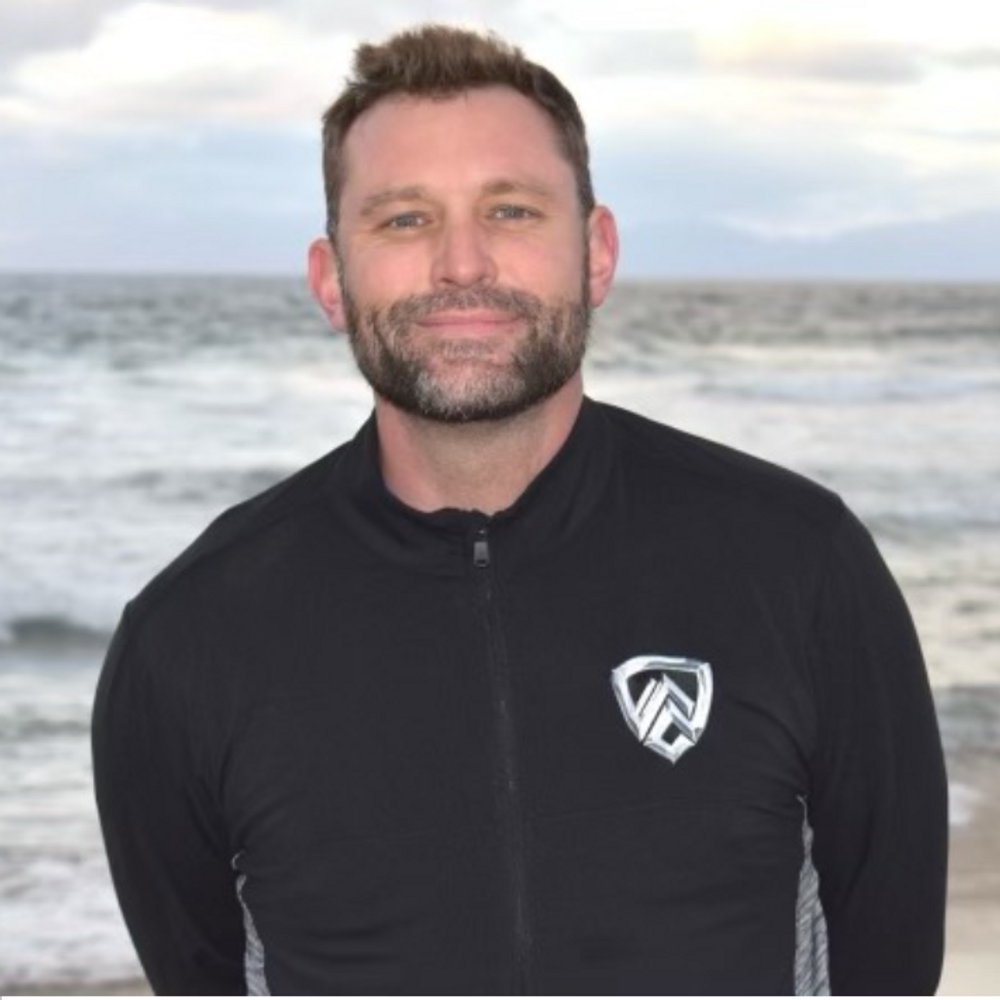
Written by Tynan Mason of Higher Grounds Management
A clean drug test can coexist with a week that is quietly coming apart. The teenager may be abstinent today while sleeping until noon, missing therapy, withdrawing from the family, running low on prescribed medication, abandoning school, and disappearing into a phone until three in the morning. In Tynan “Coach Ty” Mason’s aftercare work at Higher Grounds Management, that distinction matters enormously. Substance-use monitoring is important, but recovery cannot be reduced to what appears on a test strip. Families need to watch whether the young person’s entire life is beginning to hold together again.
"If you're stuck on the same old record player, allow us to lift the needle, and be the change and new voice to perspective and altered approach." - Coach Ty
Higher Grounds’ Back On Track Digital E-Course can give parents a structured foundation for rebuilding routines, accountability, executive functioning, and family expectations after treatment.
The Test Says Something. The Week Says More.
Consider the family whose son has just returned from treatment.
The first drug test is negative.
Everyone exhales.
But by the second week, he has missed two clinical appointments. His sleep has inverted.
He stopped exercising. His prescription is nearly empty because nobody realized the refill required another appointment. He is eating alone, avoiding school, and becoming increasingly irritable whenever his parents ask where he has been.
If the family is measuring only substance use, the scoreboard still says success.
Coach Ty would see something different: several supports around recovery are beginning to weaken simultaneously.
This is where Higher Grounds Management can complement a treatment center’s discharge plan. The work is not to recreate residential treatment inside the home. It is to help the family notice deterioration early enough to respond before a bad week becomes another crisis.
ASAM’s updated adolescent continuum now specifically includes long-term remission monitoring, recovery-management checkups, medication management when relevant, and attention to co-occurring mental-health needs. That reflects an important reality: recovery is a continuing process, not an event completed at discharge. Default
Mood: Watch the Direction, Not One Bad Day
Adolescents are allowed to have difficult days.
The concern is trajectory.
A family should notice whether irritability is becoming more frequent, whether the teen is withdrawing from people they previously enjoyed, whether hopelessness is appearing, or whether emotional volatility is beginning to interfere with normal functioning.
Coach Ty encourages parents to separate observation from interrogation. “You have seemed more withdrawn this week” creates a different conversation than “Are you using again?”
Mood changes are information. They are not automatic proof of relapse.
Significant depression, suicidality, self-harm, psychosis, or other acute psychiatric changes require prompt licensed clinical or emergency evaluation rather than coaching alone.
From a past client's perspective, she shared a vulnerable story from start to finish as to what this process looks like and the harmony restored in their family by the time they no longer needed Higher Grounds Management's services:
"Tynan Mason and his entire team, especially Nolan, have been an absolute godsend to our family. For over a year, we watched our young adult son struggle in a very dark place. After dropping out of college, he moved back home and withdrew from the world completely. He flipped his days and nights, stopped eating, lost an alarming amount of weight, and picked up smoking. He was trapped in a deep depression, and as his parents, we felt completely helpless. Because he was over 18, we couldn't force him into treatment, and he refused to engage with the psychologists we found. Our hands were tied, and we were desperate. Then, a family counselor recommended the nonprofit organization Higher Grounds Management. While my husband was skeptical, I was willing to try anything. From our very first family meeting, Ty and Nolan made it clear that healing is a family process. We chose to trust them completely, even when it was incredibly hard. Nolan would physically come to our house two to three times a week to get our son out of bed, ensure he ate, and take him out for exercise—things we simply could not get him to do on our own. They say it takes a village to raise a child, and as parents, we had to step back and let Ty and Nolan work their magic with a healthy dose of tough love. I have never met individuals so genuinely passionate about their work and so deeply invested in the well-being of another person's child. They truly have hearts of gold. While our son is still in the program and his recovery is an ongoing journey, the milestones we have reached so far are nothing short of a miracle. I will happily continue to invest in my son and this life-changing program. Our road to success is still being written, but we finally have hope."
-Renee Hubler
Sleep: The Night Often Predicts the Morning
A household can lose stability one bedtime at a time.
A teen stays online until 1:30 a.m. Then 2:00. School becomes harder. Morning conflict increases. Attendance begins slipping. Exercise disappears because the teen is exhausted.
Soon what looks like a motivation problem is partially a rhythm problem.
Higher Grounds helps families establish concrete expectations around devices, sleep, and morning responsibility rather than repeatedly arguing about whether the teenager is “trying hard enough.” When technology is part of the disruption, families can use the Qustodio App Setup Guide to create clearer digital boundaries.
Clinical Appointments: Attendance Is Part of Recovery
After discharge, the calendar matters.
Therapy appointments, psychiatry visits, medical follow-ups, recovery groups, and other clinically recommended services are not background details. Missed appointments may represent transportation problems, disorganization, ambivalence, avoidance, worsening symptoms, or disengagement from care.
SAMHSA uses continuity after inpatient or residential substance-use treatment as an explicit quality measure, examining whether follow-up treatment occurs soon after discharge. SAMHSA
Higher Grounds can help families organize the practical side: calendars, reminders, transportation planning, accountability, and follow-through, while leaving clinical decisions to the appropriate professionals.
Medication Access: Do Not Discover the Problem When the Bottle Is Empty
Medication deserves its own place in an aftercare plan.
Does the teen have access to prescribed medication? Are refills being requested in time? Is the family following the prescriber’s instructions? If a controlled medication is involved, is storage appropriate?
Families should not change doses, discontinue medication, or improvise medication decisions through coaching. Those questions belong with the prescribing clinician.
The American Academy of Pediatrics specifically emphasizes medication adherence, follow-up, and precautions around diversion or theft for controlled medications. American Academy of Pediatrics
Daily Routine: Recovery Has to Occupy the Hours
This is where Coach Ty’s work becomes especially concrete.
What fills the day now?
School or work. Meals. Exercise. Household responsibilities. Appointments. Social contact. Sleep. Time outdoors. Recreation.
Empty hours matter because removing a substance does not automatically create a meaningful life in its place.
For clinically appropriate young people, The Ranch can provide a different environment built around physical activity, outdoor work, animal care, reduced digital stimulation, and responsibility. It is not a substitute for needed addiction or psychiatric treatment; its value is experiential structure.
The Google Reviews Point Toward Something Larger Than Abstinence
A recurring theme in Higher Grounds’ publicly posted family feedback is not simply that a teenager stopped doing something destructive. Parents describe recovering parts of ordinary family life: greater connection, more responsibility, more confidence in parenting, and a young person becoming emotionally reachable again. One testimonial republished by Higher Grounds describes a family arriving after previous attempts involving rehab, therapy, and punishment had not produced the change they needed; another describes the significance of small everyday behaviors returning. HigherGrounds
That is the resolution worth noticing.
A successful discharge should eventually be visible beyond toxicology.
The teenager starts keeping appointments.
Sleep stabilizes.
School participation returns.
Parents stop chasing every responsibility.
The young person begins contributing again.
The family can have a difficult evening without immediately assuming catastrophe.
Higher Grounds Management combines Tynan Mason’s hands-on family intervention experience with the behavioral expertise of Jose Juan “JJ” Bustamante, BCBA — Certification No. 1-11-9050, NPI No. 1023416039. Their work helps parents move beyond reacting emotionally to behavior and instead identify observable patterns, measure what is changing, and make evidence-informed decisions about the strategies most likely to improve daily functioning.
For Treatment Centers: Discharge Should Hand the Family Something They Can Carry
A drug test answers an important question.
It does not answer all of them.
After discharge, families should be watching substance use, mood, sleep, clinical engagement, medication access, school or work participation, digital habits, daily structure, relationships, and increasing personal responsibility.
That is where Higher Grounds can serve as a practical aftercare partner when the young person is clinically appropriate for this level of support.
Treatment may help interrupt the collapse.
Aftercare must help the young person build a life that gives recovery somewhere to live.
References
American Academy of Pediatrics. Adolescent Opioid Use: Frequently Asked Questions. AAP
American Society of Addiction Medicine. (2026). Adolescents and Transition-Aged Youth Volume. ASAM
Substance Abuse and Mental Health Services Administration. Continuity of Care After Inpatient or Residential Treatment for Substance Use Disorder. SAMHSA


