


Is Alternative to Wilderness Therapy Right for My Defiant Teen?
How to decide whether your teenager truly needs to leave home—or whether the more important work is rebuilding responsibility, structure, and family influence where daily life actually happens.
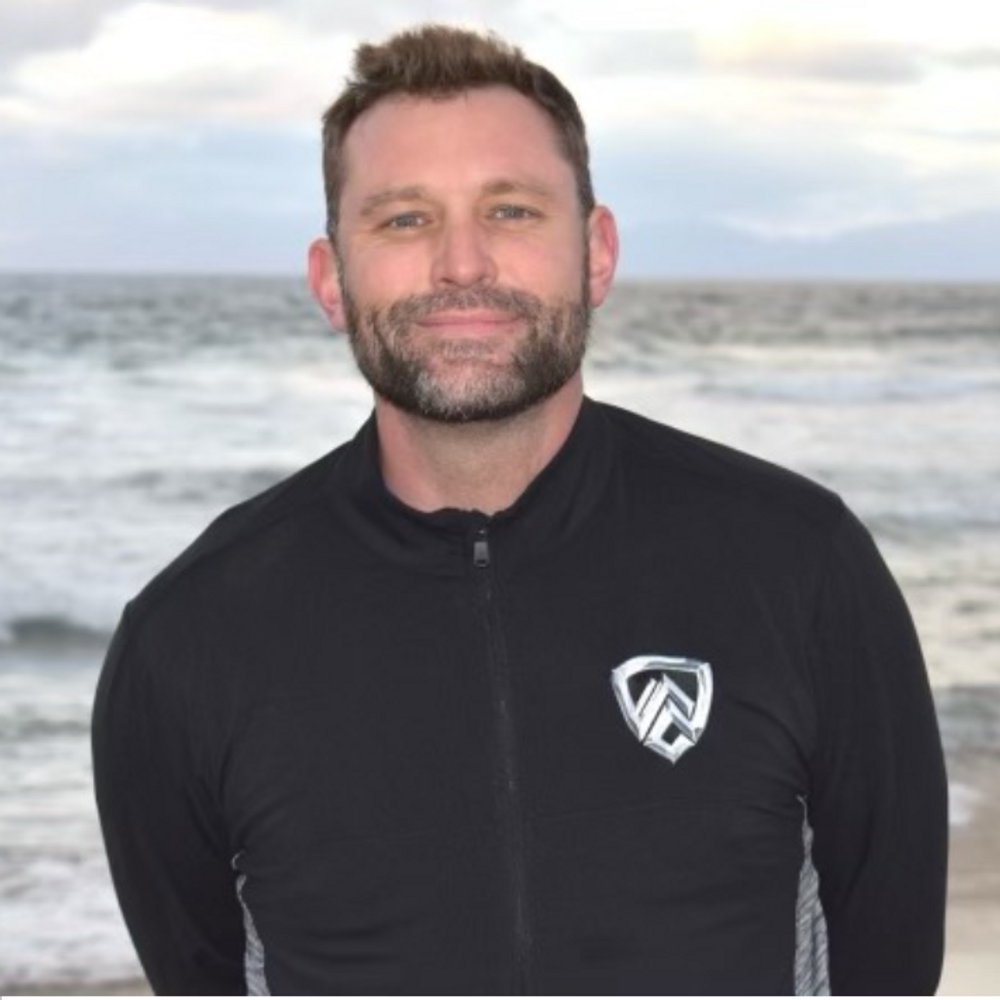
Written by Tynan Mason of Higher Grounds Management
Before You Send a Teen Away, Ask What You Need the Distance to Accomplish
When a home has become so tense that distance starts to feel like relief, Coach Ty looks first at what the family is trying to escape from...not simply where the teenager could be sent.
If rules collapse under pressure, school concerns remain unresolved, and conflict has become the strongest force in the house, removing the teen may interrupt the pattern temporarily. It does not automatically explain it.
That distinction matters. Sometimes a different level of care is appropriate. Other times, the deeper issue is a household that has lost clarity around boundaries, follow-through, or responsibility. Coach Ty’s work begins by separating those possibilities before a family makes a major decision.
The question is not whether distance can create relief. It is whether the intervention addresses the cause strongly enough that the same pattern does not return when the teenager comes home.
The American Academy of Child and Adolescent Psychiatry describes youth mental-health care as a continuum ranging from outpatient and home-based services through intensive outpatient, partial hospitalization, residential care, and hospitalization. AACAP endorses treatment in the least restrictive setting appropriate to the young person’s clinical needs. AACAP
That principle should guide the decision.
Higher Grounds’ Back On Track Digital E-Course gives teens, young adults, and parents structured tools for accountability, routines, digital habits, executive functioning, and family follow-through before a family assumes physical removal is the only remaining option.
Defiance Is a Description, Not a Treatment Plan
A teenager can look “defiant” for profoundly different reasons.
One may be anxious and avoiding school.
Another may have ADHD and repeatedly fail to organize responsibilities.
Another may be using substances.
Another may have learned that escalation reliably causes adults to abandon expectations.
Another may be depressed.
And another may be developmentally pushing for independence while the family has not yet adjusted how authority is exercised.
Those teenagers should not automatically receive the same intervention simply because the surface behavior resembles rebellion.
This is one reason AACAP recommends qualified assessment before selecting a level of care. When young people need more than weekly therapy but do not require 24-hour treatment, intensive outpatient and partial hospitalization programs may provide substantially more clinical structure while allowing them to continue living at home. AACAP
The appropriate intervention follows the need, not the marketing category.
The Seduction of the Dramatic Intervention
When home life has become chaotic, dramatic action can feel morally satisfying.
Something big must happen because the problem feels big.
But intensity and accuracy are not the same thing.
Removing a teenager from ordinary life can interrupt a pattern. It can create distance from devices, peers, conflict, substances, avoidance, or familiar routines.
The more difficult question is:
What happens when ordinary life returns?
The bedroom is still there.
The school is still there.
The parents are still there.
The phone returns.
So do disappointment, boredom, deadlines, temptation, and family history.
An intervention has accomplished relatively little if responsible behavior exists only inside the intervention.
Change must survive reentry.
The Higher Grounds Reentry Standard
Before choosing an alternative to wilderness therapy, or any highly structured intervention, evaluate it through four questions.
1. Does It Address the Actual Driver?
If serious depression, suicidality, psychosis, dangerous substance use, eating-disorder symptoms, or severe aggression are present, the family needs appropriately qualified clinical care.
Coaching should not impersonate treatment.
Conversely, if the primary problems are weak routines, excessive screens, chronic avoidance, inconsistent parental follow-through, poor executive functioning, and deteriorating responsibility, sending a teenager far away may not be the first necessary move.
The mechanism matters.
2. Does the Family Participate?
This question is enormous.
A 2023 systematic review and meta-analysis of psychosocial treatments for adolescent disruptive behavior found strong benefits at treatment completion, with family-format intervention emerging as the strongest treatment-format variable. Benefits were less consistent at follow-up, which makes sustaining change especially important. PubMed
Parents should therefore be wary of any model that implicitly communicates:
“Give us the difficult teenager. We will return a corrected one.”
Families are systems.
If the teenager changes while the household does not, the old conditions may simply recreate the old conflict.
3. Can the Skills Be Practiced in Real Life?
A teenager needs more than insight.
They need to wake up when required.
Complete work when bored.
Put a phone down.
Tell the truth after making a mistake.
Handle a parent saying no.
Repair damaged trust.
Keep commitments without somebody hovering nearby.
Those are not wilderness skills.
They are life skills.
The closer intervention gets to the circumstances in which failure normally occurs, the more
directly those circumstances can be studied.
4. Does Support Decrease as Competence Increases?
A good intervention should eventually make itself less necessary.
If the teenager can function only while surrounded by professionals, rigid structure, or extraordinary environmental control, the work is unfinished.
The destination is not permanent supervision.
It is increasing self-government.
Where Higher Grounds Management Fits
This is where Higher Grounds takes a deliberately different position.
Rather than beginning with the assumption that the teenager must be removed from home,
Higher Grounds asks what can be changed inside ordinary life first.
Families can explore Higher Grounds Management for behavioral coaching and mentorship, parent guidance, executive-functioning support, academic accountability, digital intervention, virtual support, and in-home work where available. Higher Grounds publicly describes its model as guidance in the young person’s real environment, support for both parent and child, and practical behavioral structure. HigherGrounds
The objective is not making the home easier by removing the teenager.
It is helping make the teenager more capable inside the home they eventually have to live in.
That can involve examining:
What precedes refusal?
What happens after escalation?
Which responsibilities disappear after an argument?
How many reminders are required?
What privileges remain available despite nonperformance?
Where are parents contradicting one another?
Where is the teenager genuinely lacking a skill rather than merely refusing a demand?
This is where data-driven decisions become more useful than decisions made at the emotional peak of another terrible evening.
Higher Grounds’ Qustodio App Setup Guide can help families create more concrete technology boundaries.
There Is Still Value in Leaving the Usual Environment
Rejecting the assumption that every struggling teenager needs wilderness treatment does not mean environment never matters.
Sometimes the home has accumulated so much conflict and digital stimulation that a clinically stable young person benefits from temporary distance and physical challenge.
Higher Grounds’ The Ranch uses outdoor work, physical activity, animal care, reduced digital distraction, and shared responsibility as an experiential intervention. Higher Grounds describes it as a digital-detox and wellness setting built around real-world participation and tangible work. HigherGrounds
The distinction is important.
The Ranch is not psychiatric hospitalization, residential psychiatric treatment, medical detoxification, or an emergency placement.
Sometimes changing the environment can reveal capability.
But the purpose should be bringing capability back home.
Why Behavioral Measurement Matters
Tynan Mason works closely with Jose Juan “JJ” Bustamante, BCBA — Certification #1-11-9050, reinforcing Higher Grounds’ use of behavioral observation and measurable patterns.
Instead of concluding:
“My teenager needs something drastic.”
Measure what is actually deteriorating.
School attendance.
Aggressive episodes.
Duration of arguments.
Sleep.
Assignments completed.
Substance use.
Prompts required.
Digital access.
Repair after conflict.
Family follow-through.
Measurement can reveal whether the situation is escalating or whether fear has made every difficult night feel equally catastrophic.
A Wellness Voice profile of Higher Grounds Management describes its data-informed approach, family coaching, mentorship, executive-functioning support, and focus on observable behavioral patterns.
A Forbes feature on family mental-health support similarly highlighted Tynan Mason and Higher Grounds’ emphasis on parent coaching, behavioral tracking, antecedents, reinforcement, and home systems families can increasingly maintain themselves.
When Residential Treatment Really May Be Appropriate
An alternative to wilderness therapy is not automatically an alternative to all intensive treatment.
AACAP states that residential treatment can be appropriate for young people with serious emotional or behavioral problems whose health is at risk in the community, who have not responded adequately to outpatient treatment, or who require intensive treatment following hospitalization. High-quality residential programs should provide comprehensive assessment, individualized treatment, psychiatric involvement, evidence-based therapies, education, family participation, and predictable nonviolent care. AACAP
AACAP also explicitly distinguishes clinical residential treatment facilities from wilderness and boot-camp models. AACAP
Frequently Asked Questions
Is Wilderness Therapy the Same as Residential Treatment?
No. AACAP distinguishes clinical residential treatment facilities from wilderness and boot-camp programs. Residential psychiatric treatment should include comprehensive clinical services and appropriately qualified professionals. AACAP
Can My Teen Improve Without Leaving Home?
Sometimes, yes. Outpatient, home-based, family, behavioral, and intensive outpatient approaches may be appropriate depending on safety and severity. AACAP
What if My Teen Refuses Everything?
Parents can still change routines, privileges, digital access, prompting, reinforcement, and their own responses. Resistance does not eliminate parental influence.
When Is Coaching Not Enough?
Serious suicidality, self-harm, psychosis, dangerous substance use, severe aggression, eating-disorder instability, or inability to remain safely supervised requires appropriate clinical or emergency assessment.
What Should I Ask Any Program?
Ask who provides treatment, how safety is managed, whether the program is licensed where applicable, how parents participate, how progress is measured, what happens after discharge, and how the program decides a young person needs a different level of care.
Higher Grounds Resources
References
American Academy of Child and Adolescent Psychiatry. (2023). Continuum of Mental Health Care for Children and Adolescents. AACAP
American Academy of Child and Adolescent Psychiatry. (2025). Policy Statement on Youth Access to Residential Treatment Facilities. AACAP
American Academy of Child and Adolescent Psychiatry. (2026). Partial Hospitalization Programs and Intensive Outpatient Programs. AACAP
Boldrini, T., Ghiandoni, V., Mancinelli, E., Salcuni, S., & Solmi, M. (2023). Systematic review and meta-analysis: Psychosocial treatments for disruptive behavior symptoms and disorders in adolescence. Journal of the American Academy of Child & Adolescent Psychiatry, 62(2), 169–189. PubMed
Bent, A. (2026). Higher Grounds Management: Bringing a data-informed approach to family behavioral support. Wellness Voice.
MacArthur, H. V. (2025, December 18). The invisible responsibility: Leaders supporting mental health. Forbes.
Do Not Confuse Distance With Transformation
There are moments when removing a young person from an environment is clinically necessary.
There are other moments when distance merely suspends the problem.
The harder work is determining which one you are facing.
A teenager ultimately has to learn responsibility around ordinary temptations, ordinary frustration, ordinary parents, ordinary school mornings, and ordinary disappointments.
That is where adulthood will eventually demand competence.
The strongest intervention is therefore not necessarily the one that takes your teenager farthest from home.
It is the one that brings them closer to becoming capable of living responsibly when they return to it.


