


Where Can I Find ADHD Coaching Near Me for My Teen?
- Tynan Mason of Higher Grounds Management
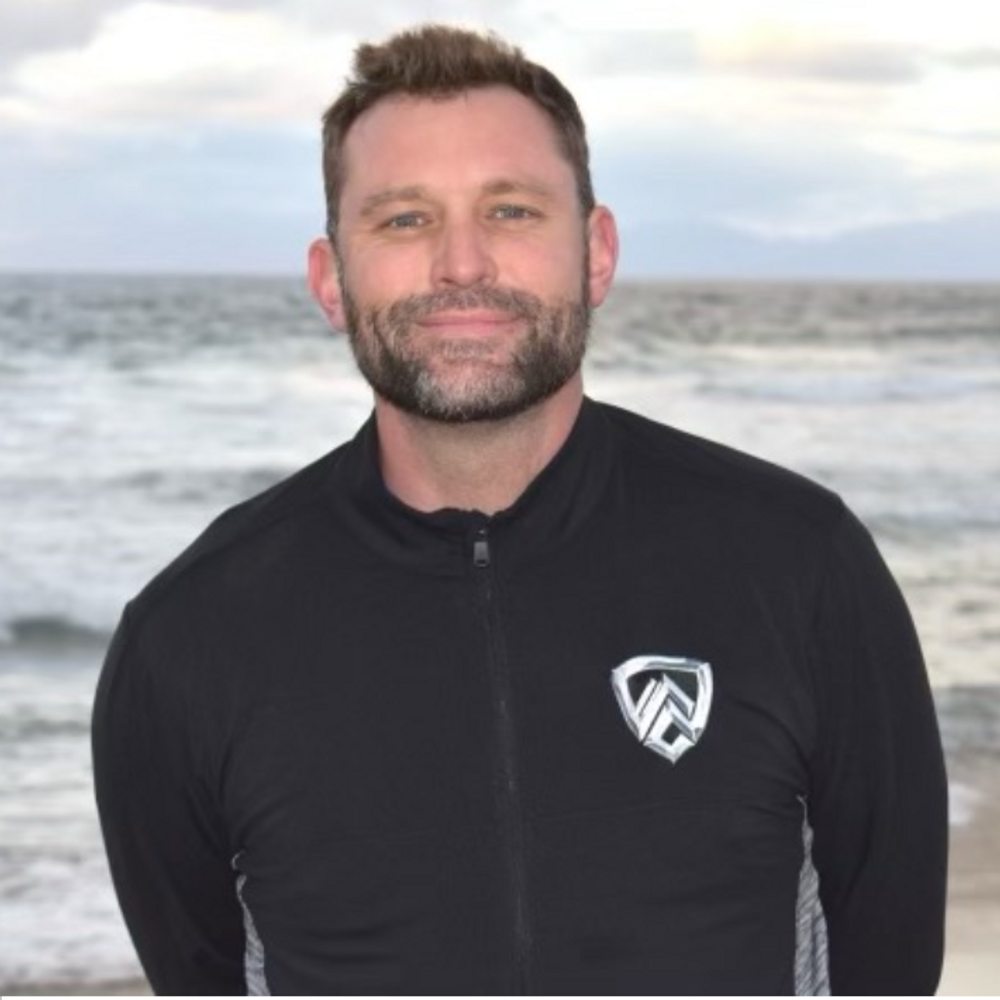
- 2 days ago
- 7 min read
A practical guide to finding evidence-informed ADHD support that tracks behavioral patterns, strengthens executive functioning, and helps teens turn good intentions into measurable follow-through.
Written by Tynan Mason of Higher Grounds Management
When Your Teen Understands the Problem but Cannot Change the Pattern
Your teen knows the assignment is due.
They understand that being late creates consequences.
They agree that the phone is distracting them.
They promise to start earlier tomorrow.
Then tomorrow looks exactly like yesterday.
Missing assignments accumulate. Morning reminders become arguments. A capable
teenager begins appearing careless, dishonest, or unmotivated.
Parents eventually search:
“Where can I find ADHD coaching near me for my teen?”
Location matters, but the closest coach is not automatically the right one.
The better question is:
“Who can identify where my teen’s follow-through breaks down, teach the missing skills, and measure whether anything is actually improving?”
Higher Grounds’ Back On Track Digital E-Course helps teens, young adults, and parents address screens, avoidance, routines, and accountability between coaching sessions.
ADHD Is More Than Difficulty Paying Attention
ADHD is a developmental disorder involving persistent patterns of inattention, hyperactivity, impulsivity, or a combination of these symptoms. It can affect organization, time management, task completion, relationships, and everyday functioning.
A teenager may understand exactly what needs to happen while struggling to:
Estimate how long something will take
Begin an uninteresting task
Organize materials
Shift away from screens
Remember multiple responsibilities
Persist when frustrated
Submit completed work
Recover after falling behind
That gap between knowing and consistently doing is where effective ADHD coaching may help.
DHD Coaching Is Not the Same as Therapy or Tutoring
A tutor usually teaches subject material.
A therapist treats mental-health concerns within their license.
A prescribing clinician evaluates medication.
An ADHD or executive-functioning coach generally helps a young person build systems for
planning, organization, routines, task initiation, and accountability.
Coaching should not replace diagnosis, psychotherapy, medication management, school accommodations, or crisis care when those services are needed.
Families do not need to choose one philosophy.
They need the correct tool for the actual problem.
Higher Grounds Field Observation: Parents Often Hire for the Wrong Breakdown
A mother may report:
“My daughter needs a math tutor.”
But her daughter understands the math when someone sits beside her.
The real sequence is:
She forgets to check the portal.
She underestimates the assignment.
She begins too late.
She becomes overwhelmed.
She opens social media.
She hides the missing work.
Her mother discovers it and lectures her.
Now an executive-functioning problem has become a trust problem.
The grade is the final outcome.
The behavioral breakdown happened much earlier.
Track the Pattern Before Choosing the Provider
Higher Grounds Management emphasizes observable and measurable behavioral patterns rather than relying only on statements such as:
“He has no motivation.”
“She does not care.”
“He is lazy.”
Track the actual chain:
Know → Plan → Start → Sustain → Finish → Submit → Verify
Where does the process stop?
A teen who does not understand the material may need tutoring.
A teen who cannot begin may need task-initiation support.
A teen who completes work but never submits it needs a different system.
Without identifying the failure point, families can spend heavily on help that never reaches the real problem.
The Higher Grounds Coaching Fit Framework
1. Define the Target Behavior
Do not begin with “improve motivation.”
Choose measurable outcomes:
Reduce missing assignments
Begin homework by an agreed time
Use a calendar daily
Complete the morning routine with fewer prompts
Communicate with teachers before deadlines
Charge the phone outside the bedroom
A goal that cannot be observed cannot be measured clearly.
2. Ask How Progress Will Be Tracked
A competent provider should be able to explain:
What is being measured
How often progress is reviewed
How parents will receive updates
What happens when the plan fails
When goals will be adjusted
BCBAs are trained to define behavior, select measurement systems, analyze assessment data, design behavior-change procedures, and evaluate whether an intervention is effective.
Tynan Mason works closely with JJ Bustamante, Higher Grounds Management’s Board Certified Behavior Analyst, to connect practical family support with observable data and evidence-informed behavioral decision-making.
3. Look for Real-Life Implementation
A teenager may explain time management perfectly during a session and still miss school the next morning.
Ask whether the coach helps the teen apply skills to:
Current assignments
Morning and evening routines
Screen transitions
Employment
Transportation
Household responsibilities
Communication with parents and teachers
Higher Grounds provides executive-functioning and ADHD coaching focused on schoolwork, study skills, accountability, and practical routines.
4. Include Parents Without Making Them the Coach
Parents need information and consistency.
They should not become permanent personal assistants.
The teen may need to use the calendar and report problems sooner.
The parent may need to stop repeating instructions, rescuing deadlines, and changing consequences during conflict.
The objective is shared accountability followed by increasing teen independence.
5. Require a Plan for Transferring Ownership
At first, the coach may organize the schedule.
Later, the teen should organize it.
At first, a parent may verify each assignment.
Later, the teen should check the portal and report progress.
Effective support should gradually reduce dependence on support.
What the Evidence Actually Supports
Research supports structured organizational and behavioral interventions for young people with ADHD.
A meta-analysis of 12 randomized studies involving 1,054 participants found that organizational-skills interventions produced moderate teacher-rated and large parent-rated improvements in organizational skills. Improvements in inattention and academic performance were more modest.
A school-based study also found that multicomponent organizational and interpersonal-skills training can benefit many high school students with ADHD.
The STAND intervention combines parent-teen behavior therapy, motivational interviewing, organization, time management, planning, parental monitoring, and contingency management. Research found benefits across ADHD symptoms, academic functioning, and parent-teen conflict.
This evidence does not prove that every person using the title “ADHD coach” is effective.
It supports structured, skill-based, measurable intervention.
When Your Teen Needs Coaching That Reaches Daily Life
Higher Grounds Management supports teens and young adults with ADHD, executive functioning, academic follow-through, mentoring, behavioral patterns, and parent accountability through in-home and virtual services.
Contact Higher Grounds Management to identify whether your teen needs coaching, tutoring, behavioral intervention, parent guidance, or referral for formal clinical assessment.
Why “Near Me” Should Not Be Your Only Filter
In-person coaching may reveal problems inside the actual environment: the backpack,
bedroom, homework station, morning routine, and family response.
Virtual coaching can also work when the provider uses a structured system and the teen participates consistently.
Prioritize:
Adolescent experience
Clear professional boundaries
Evidence-informed methods
Parent communication
Observable goals
Measurable progress
Appropriate referrals
Convenience matters.
Competence matters more.
Screens Can Undermine an Otherwise Strong Plan
Technology does not cause ADHD.
But constant notifications, gaming, social media, and late-night scrolling can make organization and task initiation harder.
Want to monitor and limit your teen’s screen time? Follow Higher Grounds’ free setup guide for the Qustodio App.
The purpose is not controlling every click.
It is building an environment where the expected behavior has a reasonable chance to occur.
What Parents Should Stop Doing
Stop Measuring Only Grades
Track initiation, honesty, organization, submission, punctuality, and independence.
Stop Calling Every Breakdown Laziness
Some avoidance is intentional. Other problems involve working memory, planning, emotional regulation, or weak routines.
Stop Hiring Help Without Defining the Goal
A pleasant weekly conversation is not enough if nothing changes at home or school.
Stop Using Coaching Instead of Clinical Care
Seek qualified assessment when symptoms are severe, undiagnosed, or accompanied by depression, anxiety, substance use, self-harm, trauma, aggression, or major functional decline.
For clinically stable young people who need an immersive environmental reset, Higher Grounds offers The Ranch, where structured activity, animal care, physical work, and reduced digital distraction reinforce responsibility and participation.
Frequently Asked Questions
How Do I Know Whether My Teen Needs an ADHD Coach?
Coaching may fit when the primary difficulties involve planning, organization, routines, task initiation, time management, or applying known strategies consistently.
Does My Teen Need an ADHD Diagnosis?
Not every executive-functioning problem means ADHD. Persistent symptoms across settings should be evaluated by a qualified professional.
What Should Improve First?
Look for fewer prompts, earlier problem reporting, better task initiation, improved submission, and greater ownership before expecting dramatic grade changes.
Can Coaching Replace Medication or Therapy?
No. Coaching addresses practical implementation. Some teenagers may also need therapy,
medication, school intervention, or other professional services.
Why Does Higher Grounds Include a BCBA?
BCBA involvement strengthens the process of defining behavioral patterns, measuring progress, evaluating outcomes, and adjusting plans based on observable information rather than stress alone.
How Higher Grounds Management Approaches ADHD Coaching
Higher Grounds combines Tynan Mason’s practical experience with BCBA-informed consultation from JJ Bustamante, executive-functioning support, mentoring, parent coaching, measurable behavioral goals, and real-world accountability.
The purpose is not to manage the teen forever.
It is to help the teen build a system they can increasingly manage themselves.
Evidence-Informed E-Courses for Teens, Young Adults, and Parents
Higher Grounds’ e-courses help families manage screens, establish routines, define responsibilities, track behavioral patterns, and practice consistent accountability between appointments.
Higher Grounds Resources
References
Behavior Analyst Certification Board. (2022). BCBA test content outline (6th ed.). Updated September 2024.
Bikic, A., Reichow, B., McCauley, S. A., Ibrahim, K., & Sukhodolsky, D. G. (2017). Meta-analysis of organizational skills interventions for children and adolescents with ADHD. Clinical Psychology Review, 52, 108–123.
DuPaul, G. J., Evans, S. W., Owens, J. S., et al. (2024). School-based intervention for adolescents with ADHD. Journal of School Psychology, 104, 101326.
National Institute of Mental Health. Attention-deficit/hyperactivity disorder.
Sibley, M. H., et al. (2016). Parent-teen behavior therapy and motivational interviewing for adolescents with ADHD. Journal of Consulting and Clinical Psychology, 84(8), 699–712.
Ready to Find Support That Produces Follow-Through?
The nearest coach is not automatically the best coach.
Look for expertise, measurable goals, evidence-informed methods, parent involvement, and a clear plan for transferring responsibility.
Explore the Back On Track Digital E-Course or contact Higher Grounds Management.
The goal is not hiring someone to remind your teenager forever. It is helping your teenager build the skills to plan, begin, adjust, and follow through independently.


Comments