


My Teenager or Young Adult Is Depressed and Won't Leave Their Room. Who Can Help?
- Tynan Mason of Higher Grounds Management

- Jan 29
- 8 min read
Join us for our new digital detox and wellness retreat for youth ages 10-12, teens, and young adults at The Ranch.
Discover the step-by-step strategies to restore connection and establish healthy digital boundaries in your home with our interactive Family Playbook.
Want to monitor and limit your teen's screen time? Follow our free set-up guide for the Qustodio App.
Get access to our exclusive e-course for children, teens, and young adults struggling with screen addiction: The 21 Day Challenge.
Contact a behavioral consultant team that is proven to get results for you and your family, no matter which city and state you live in, with Higher Grounds Mgmt.
Why Is My Teen Isolating Themselves and What Does It Mean?
As a parent, it can be heartbreaking and confusing when your teenager isolates themselves in their room, displaying signs of depression, and you don't know how to help. You might notice that they no longer seem interested in the things they once loved, their social interactions have dwindled, and they appear more withdrawn each day. If your teenager's mood has shifted, and they're no longer engaging with family, friends, or even their schoolwork, you may be wondering what steps you can take to help them feel better and re-engage with life.
The statistics surrounding teen depression are sobering. According to the National Institute of Mental Health, approximately 20% of adolescents experience a major depressive episode before reaching adulthood. The CDC reports that persistent feelings of sadness and hopelessness among high school students increased from 26% in 2009 to 44% in 2021. These aren't just numbers; they represent millions of families struggling with the same questions you're facing right now.
The good news is that you don't have to go through this alone. The first step is reaching out to the right professionals who specialize in adolescent mental health. While it's natural to feel concerned and overwhelmed, there are experts who can work with you and your teen to guide them back toward emotional stability and healthy social connections.
If you're feeling lost and unsure about what the next steps are, don't hesitate to contact a trusted behavioral consultant team that understands the complexities of teenage depression. Higher Grounds Management offers support tailored to the specific needs of your family and teen.
What Are the Signs That My Teen Is Struggling with Depression?
When it comes to teenagers, signs of depression can often go unnoticed because they may try to hide their feelings or attribute their behavior to normal teenage mood swings. However, there are some red flags that might indicate your teen is experiencing more than just a typical bad day. After working with hundreds of families across the South Bay and nationwide, the team at Higher Grounds has identified these key warning signs:
1. Withdrawal and Isolation: Your teen may begin isolating themselves more than usual. This can include spending excessive time in their room, avoiding family activities, and disconnecting from friends. Research shows that social withdrawal is one of the earliest and most reliable indicators of adolescent depression.
2. Changes in Mood: Extreme mood swings, irritability, or sadness that lasts for two weeks or more can be warning signs of depression. In teens, depression often presents as irritability rather than sadness, which can lead parents to mistake it for typical teenage attitude.
3. Loss of Interest: If your teen suddenly loses interest in hobbies or activities they used to love, this can be an indication that they're struggling emotionally. This symptom, called anhedonia, is a hallmark of depression and distinguishes it from normal teenage boredom.
4. Physical Symptoms: Changes in eating or sleeping habits, such as eating too much or too little or sleeping excessively, can sometimes signal depression. Teens with depression often report fatigue, headaches, or stomachaches that have no clear medical cause.
5. Poor School Performance: A sharp decline in grades or a lack of motivation toward schoolwork may be linked to underlying emotional issues. Depression affects concentration, memory, and decision-making abilities, all of which impact academic performance.
6. Talk of Hopelessness or Worthlessness: Comments like "nothing matters" or "what's the point" should be taken seriously. These expressions of hopelessness indicate that your teen may be experiencing more than temporary sadness.
7. Increased Sensitivity to Rejection: Depressed teens often become hypersensitive to criticism or perceived rejection, reacting intensely to situations that previously wouldn't have bothered them.
If you recognize these behaviors in your teen, it's essential to take them seriously. Depression doesn't just go away on its own, and ignoring it can make things worse over time. Early intervention significantly improves outcomes for adolescent depression.
Contact us today to get personalized support for your family's needs.
How Can I Support My Teen While They're Going Through This?
As a parent, it's important to approach your teenager with empathy and understanding. Though it may be tempting to "fix" everything quickly, the most helpful thing you can do is create a safe, open space where they feel heard and supported. Research consistently shows that parental support is one of the strongest protective factors against worsening depression in adolescents.
1. Start a Conversation: Let your teen know you're there for them, but try not to pressure them into talking if they're not ready. Use open-ended questions like, "I've noticed you've been spending a lot of time in your room lately. How are you feeling?" to start the conversation in a non-confrontational way. Timing matters; choose a moment when you're both relaxed rather than during conflict.
2. Listen Without Judgment: If your teen does open up, listen carefully without jumping to conclusions or offering advice immediately. Sometimes, just being heard can make a huge difference in how they feel. Resist the urge to minimize their feelings or compare their problems to what you faced at their age.
3. Encourage Healthy Habits: While your teen may not feel motivated, try to encourage small steps toward a healthier routine. Research shows that exercise, adequate sleep, and proper nutrition all have measurable effects on mood. Ask them to join you for a short walk or participate in a family activity. Small wins build momentum.
4. Maintain Connection Without Pressure: Even if your teen pushes you away, continue to show up. Leave notes, prepare their favorite meal, or simply sit in their room without requiring conversation. Your consistent presence communicates love even when they can't receive it verbally.
5. Seek Professional Help: It can be incredibly valuable to get support from a professional therapist or counselor. Behavioral consultants can help your teen work through their depression in a safe and structured environment while also providing guidance for parents on how to best support the recovery process.
One common mistake parents make is waiting too long to seek help, hoping the situation will resolve itself. A study in the Journal of the American Academy of Child and Adolescent Psychiatry found that the average delay between onset of depression symptoms and treatment is between 6 and 8 years. Don't let your teen become part of that statistic.
Who Can Help My Teen with Their Depression?
Finding the right support matters, especially when a teenager is struggling with depression. Love and encouragement at home are essential, but they are often not enough on their own. A trained professional brings structure, clarity, and an outside perspective when emotions have become overwhelming. Behavioral consultants who specialize in adolescents don’t just talk about change; they help create it. By working directly in the home, patterns are seen as they actually unfold and intervene in real time, as well as when habits, emotions, and conflicts surface. This practical approach helps teens build emotional regulation, resilience, and responsibility in ways that translate into daily life, not just a weekly session.
The goal isn’t dependence on support, but the development of skills your teen can carry forward long after the crisis has passed. Higher Grounds Management has a team of specialists who are trained to work with teens and families struggling with depression and other mental health challenges. Our team includes Board Certified Behavior Analysts, Licensed Marriage and Family Therapists, and Certified Life Coaches who bring diverse expertise to each case. We don't believe in one-size-fits-all approaches; every teen's depression has unique contributing factors that require individualized attention.
If you feel your teen would benefit from professional help, consider reaching out for support. Contact us today to learn more about how our team can assist in creating a plan for your teen's emotional health and well-being.
Why Is It Important to Take Action Now?
The teenage years matter more than we often realize. This is a time when young people are figuring out who they are while their brains are still taking shape. The patterns they develop now in how they handle stress relationships and setbacks tend to carry forward into adulthood. When depression is ignored it does not simply resolve on its own. It can slowly chip away at confidence, motivation and connection affecting school friendships and a teen’s sense of worth. Over time those struggles can begin to feel normal even though they do not have to be, and this is what anchors them in their room and away from the world. Addressing depression early is not about labeling or overreacting. It is about giving a young person the support they need while growth is still possible and healthier patterns can still take root.
The data on untreated adolescent depression is concerning. Research published in the Archives of General Psychiatry found that teens with untreated depression are more likely to experience recurrent depressive episodes as adults, struggle with maintaining employment, have difficulty in romantic relationships, and develop co-occurring conditions like anxiety or substance use disorders. Left untreated, depression can also lead to more severe mental health struggles. Teens who feel hopeless and disconnected are at higher risk for substance use as a form of self-medication, and in the most serious cases, thoughts of self-harm. These aren't outcomes that any parent wants to consider, but they underscore why early intervention matters so much.
That's why it's important to take action early, and to trust your guts as parents when noticing these changes. Take initiative, be proactive and before it becomes reactive.. If you're noticing warning signs of depression in your teen, it's crucial to seek out professional help as soon as possible. With the right support, your teen can begin to develop the coping mechanisms and emotional resilience they need to lead a healthier, more balanced life.
How Does Higher Grounds Management Help Families Dealing with Teen Depression?
Higher Grounds Management is dedicated to providing families with the tools and support they need to navigate the challenges of teenage depression. Our team of experienced behavioral consultants works with teens and their families to create individualized plans designed to address each teen's unique needs.
Our in-home approach sets us apart from traditional outpatient therapy. We don't just meet with your teen for an hour a week in an office. We come into your home, observe the actual environment and family dynamics, and implement strategies in real time. This allows us to identify patterns and triggers that would never surface in a clinical setting.
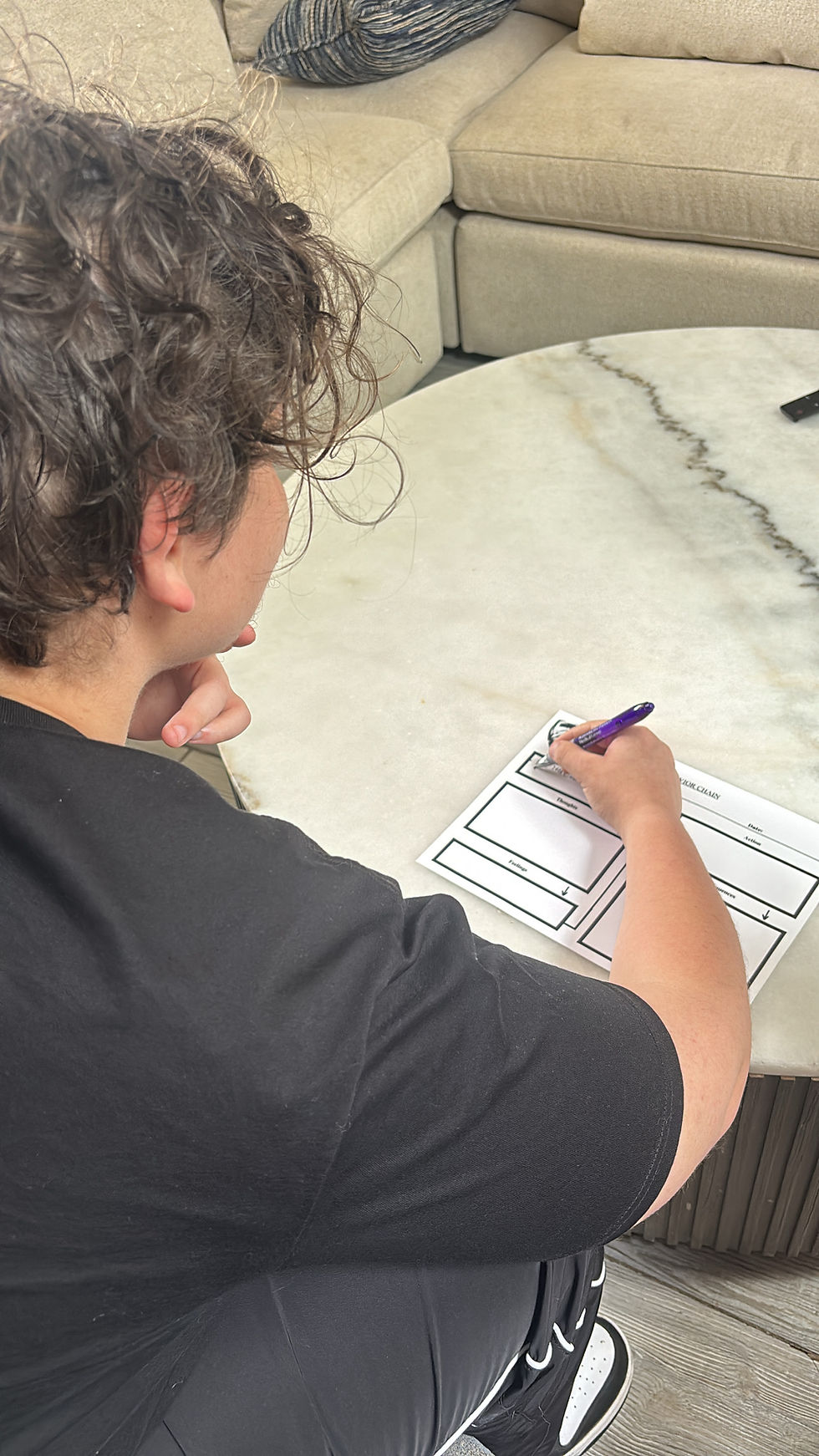
Whether your teen is struggling with isolation, loss of interest in activities, or deeper emotional issues, we offer strategies that develop open communication, emotional regulation, and healthy coping skills. We also provide parent coaching so you know how to respond effectively when your teen is having difficult days and with our provided data sheet formulas, once they are sent our way, will allow us to sit with your teen and do a behavior chain to help them use critical thinking skills in the future.
One Manhattan Beach family we worked with had a 15-year-old daughter who hadn't left her room for anything other than school in three months. Traditional therapy wasn't producing results because she would simply shut down during sessions. By working in the home, our team was able to gradually build trust, identify that social anxiety was compounding her depression, and create small daily goals that eventually led to her rejoining family dinners and reconnecting with one close friend. Within four months, her parents described her as "a different person."
We are here to support you and your teen through this difficult time. Contact us today to learn more about how we can help your family thrive.
What Should I Do Next to Help My Depressed Teen?
If you're ready to take action and help your teen find their way out of depression, the first step is reaching out for a confidential consultation. Our team will listen to your concerns, assess your situation, and help you determine the best path forward for your family.
If you're in Manhattan Beach, Hermosa Beach, Redondo Beach, El Segundo, Torrance, Rolling Hills, Rancho Palos Verdes, Newport Beach, Corona Del Mar or anywhere in Orange County, Higher Grounds Management is here to help. We also offer virtual support and therapy to families nationwide.



Comments