


Is Teen Intervention California Right for My Out-of-Control Teen?
A practical guide to deciding when a struggling teenager needs stronger boundaries, behavioral intervention, clinical treatment, or a higher level of care, and why the right response begins with understanding what has actually taken control of the home.
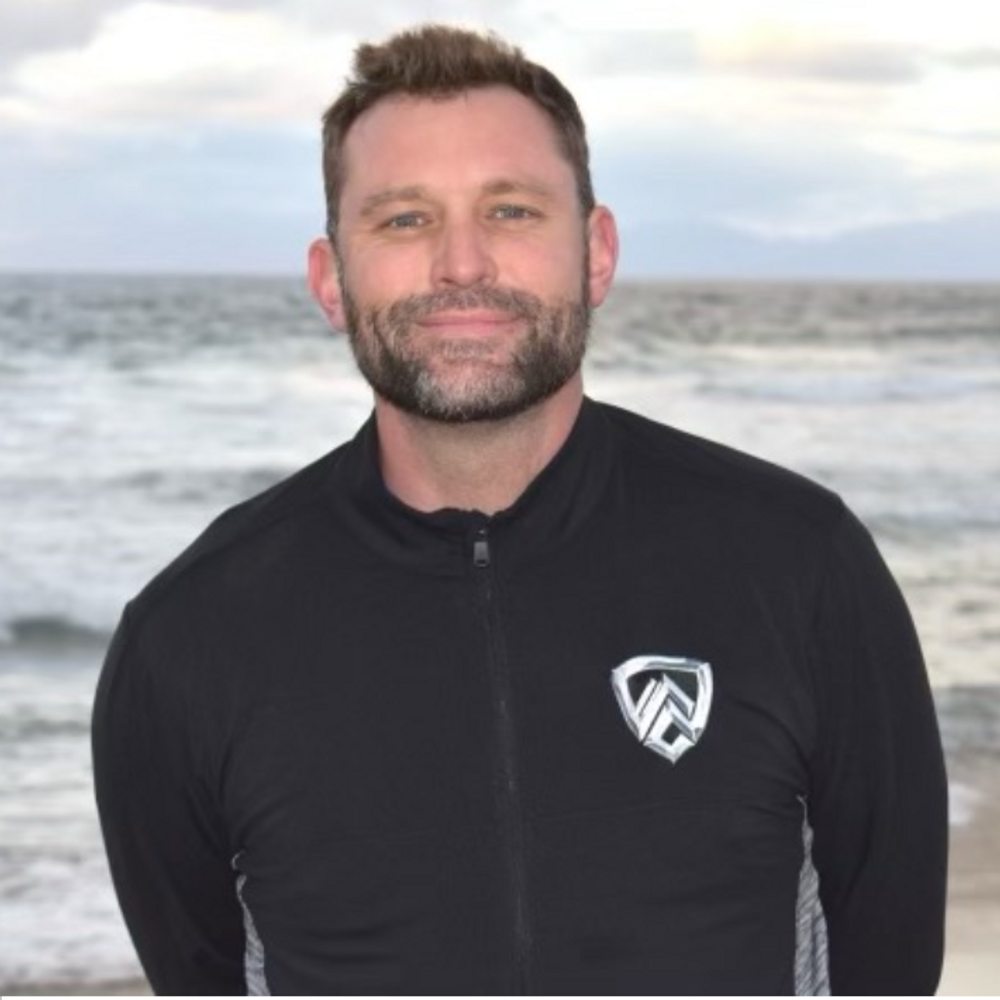
Written by Tynan Mason of Higher Grounds Management
“Out of Control” Usually Means the Family Has Lost Reliable Influence
There is a moment when parenting begins to feel strangely powerless.
The rules still exist, but they no longer carry weight.
Your teenager skips school, ignores curfew, lies about where they have been, sleeps through the day, disappears into a screen, or becomes so explosive that ordinary requests are abandoned simply to restore quiet.
Parents eventually start searching for teen intervention in California because familiar tools have stopped producing familiar results.
But “out of control” is not a diagnosis.
It is a warning that the current system is no longer reliably influencing behavior.
And that distinction matters.
The goal of intervention should not be to overpower a teenager until compliance returns. It should be to determine why ordinary authority has stopped working, what risks are actually present, and what form of help is proportional to the problem.
AACAP recommends evaluating persistent oppositional behavior for co-occurring conditions such as ADHD, anxiety, mood disorders, and learning difficulties, while noting that treatment may involve parent-management training, individual or family psychotherapy, problem-solving work, and other supports depending on the young person’s needs. AACAP
Higher Grounds’ Back On Track Digital E-Course gives teens, young adults, and parents structured tools for accountability, routines, digital habits, and behavioral follow-through while families determine what additional support is warranted.
Before You Ask How to Control the Teen, Ask What Is Controlling the Pattern
A teenager refuses school.
Why?
Perhaps anxiety has made school feel intolerable.
Perhaps marijuana use has disrupted motivation and sleep.
Perhaps ADHD has allowed academic responsibilities to accumulate until avoidance feels
easier than facing them.
Perhaps the teenager has learned that sufficient escalation causes the adults to retreat.
Those possibilities may look almost identical at 7:30 on Monday morning.
They require very different responses.
Intervention becomes reckless when the family acts on the behavior’s volume before understanding its function.
A consequence cannot treat major depression.
Psychotherapy alone may not correct a home system in which every expectation becomes negotiable.
Mentoring cannot replace psychiatric stabilization.
And hospitalization should not become the answer to ordinary family conflict simply because everyone is exhausted.
The intervention must fit the mechanism.
Higher Grounds Field Observation: Families Can Lose Authority One Exception at a Time
Consider a composite pattern.
A sixteen-year-old is supposed to come home by 10:30.
He arrives after midnight.
His parents confront him.
He becomes furious, accuses them of controlling him, punches a wall, and threatens to
leave.
The parents become frightened.
The conversation stops.
A few days later, curfew is discussed again—but less firmly.
Then another violation occurs.
Again, the teenager escalates.
Eventually, there is technically still a curfew, but everyone understands something unspoken:
The rule survives only when the teenager permits it to.
No single decision created that arrangement.
The household adapted incrementally to volatility.
This is why intervention is often less about inventing stricter rules and more about restoring
a credible relationship between behavior, consequence, freedom, and responsibility.
The Higher Grounds Leverage Audit
Before deciding what kind of California teen intervention your family needs, examine four forms of leverage.
Safety
Can your teenager remain safely at home?
Suicidal intent, serious self-harm, psychosis, dangerous intoxication, severe violence, or an inability to remain safely supervised are not ordinary coaching concerns.
California’s 988 network provides free, confidential behavioral-health crisis support 24/7 across all 58 counties, including initial risk screening, de-escalation, and referrals to local resources. DHCS
Safety comes before philosophy.
Function
Look beyond whether your teenager is irritating or disrespectful.
What is actually deteriorating?
School attendance?
Sleep?
Hygiene?
Substance use?
Friendships?
Academic performance?
Family participation?
Legal or disciplinary problems?
A teenager can be argumentative while functioning reasonably well. Another can be relatively quiet while their life is collapsing.
Intervention should respond to impairment, not merely parental frustration.
Influence
Which adult actions still affect behavior?
Do privileges matter?
Does the teenager respond differently to teachers, coaches, employers, mentors, or
extended family?
Can expectations be enforced without hours of argument?
Where influence still exists, intervention may be able to strengthen it.
Where influence has disappeared almost entirely, the family may need more intensive
support.
Transfer
Suppose the teenager behaves better with a therapist, coach, mentor, or in a structured program.
Does that change travel home?
If responsibility exists only when the professional is present, progress remains fragile.
The final objective is not better behavior around experts.
It is greater self-management when nobody is supervising.
California Families Have More Than One Door Into Help
California’s behavioral-health system includes services that families may overlook while searching exclusively for private programs.
The state’s Children and Youth Behavioral Health Initiative now supports school and school-linked mental-health services, including counseling, screening, parent-child sessions, care coordination, and wellness coaching. Eligible students at California public schools and colleges can access covered school-linked services without out-of-pocket costs under the program. California also offers Soluna, a free virtual behavioral-health platform for teens and young adults ages 13–25 that does not require insurance or a referral. DHCS
For eligible Medi-Cal youth with more significant behavioral-health needs, California also provides Specialty Mental Health Services through county systems. Therapeutic Behavioral
Services can provide individualized, short-term support to qualifying youth with serious emotional and behavioral needs, including work inside the home intended to reduce severe problem behavior and potentially prevent higher levels of care. DHCS
The important point is not that every family should use the same public service.
It is that California intervention is a continuum, not a single program.
Family Intervention Has an Evidence Base
The strongest adolescent disruptive-behavior research does not support a simple “send the
teen away and fix them” philosophy.
A meta-analysis of randomized trials examining psychosocial treatments for adolescents with disruptive behavior disorders found substantial improvement at the end of treatment, with family-format intervention emerging as the strongest treatment-format variable. The authors also found that gains were less consistent at follow-up, underscoring the challenge of making change durable. PubMed
A newer meta-analysis of psychosocial interventions similarly found benefits for parent-involved and multicomponent approaches, while cautioning that evidence is stronger for some age groups and short-term outcomes than for long-term adolescent results. PubMed
This is why the home cannot remain an afterthought.
The teenager may need treatment.
The family may also need a new operating system.
Where Higher Grounds Management Fits
Higher Grounds Management works with teens and young adults through behavioral coaching, mentorship, executive-functioning support, academic accountability, parent guidance, digital intervention, and in-home or virtual support. Its current model emphasizes helping families identify what is driving a pattern and building structure where daily behavior actually occurs. HigherGrounds
Families can explore Higher Grounds Management when the problem extends beyond knowing what should happen and into the harder question of how to make change survive real life.
Higher Grounds is not a substitute for psychiatric hospitalization, emergency treatment, licensed psychotherapy, or medical care when those services are clinically required.
The company’s role is more specific:
Bring accountability, observation, coaching, and behavioral structure closer to the environment where the pattern keeps repeating.
Why JJ Bustamante and Measurement Matter
Tynan Mason works closely with Jose Juan “JJ” Bustamante, BCBA — Certification #1-11-9050, reinforcing Higher Grounds’ emphasis on observable and measurable behavioral patterns.
Instead of saying:
“He is completely out of control.”
Define what that actually means.
Three school absences?
Five curfew violations?
Daily verbal aggression?
Two hours of gaming after expectations are ignored?
Six parental prompts before a responsibility begins?
No repair afterward?
Measurement does not make parenting impersonal.
It makes intervention more accurate.
A family making decisions from observable patterns is less vulnerable to being governed by one catastrophic evening...or seduced by one unusually peaceful weekend.
Outside Recognition of the Higher Grounds Model
A Wellness Voice profile describes Higher Grounds’ approach as combining in-home and virtual behavioral support, mentorship, executive-functioning assistance, family coaching, and measurable data, while specifically identifying JJ Bustamante’s BCBA involvement. Wellness Voice
A 2025 Forbes feature also highlighted Tynan Mason and Higher Grounds’ emphasis on parent coaching, tracking behavioral antecedents, positive reinforcement, and building systems inside the home that parents can eventually sustain with less outside assistance. Forbes
That final idea is critical.
A successful intervention should not make the family permanently dependent on intervention.
Digital Conflict Can Reveal Where Authority Has Broken Down
Phones and gaming often become the arena in which a larger problem becomes unmistakable.
The teenager refuses to shut down.
The parent threatens.
The teen escalates.
The rule moves.
Now the device has exposed something larger than screen time:
The household does not possess a predictable process for disagreement.
Higher Grounds’ Qustodio App Setup Guide can help families create clearer monitoring and technology boundaries.
Software cannot restore parental authority.
But it can reduce ambiguity while the family rebuilds it.
When a Different Environment May Help
For clinically stable young people whose home patterns have become deeply entangled with screens, inactivity, avoidance, and constant negotiation, a temporary environmental shift can sometimes make those patterns easier to see.
Higher Grounds’ The Ranch uses physical work, outdoor activity, animal care, reduced digital distraction, and shared responsibility as part of its experiential model. Higher Grounds explicitly distinguishes this from emergency hospitalization, medical detoxification, and residential psychiatric treatment. HigherGrounds
Changing the environment should not become an escape from the problem.
It should create another opportunity to practice what ordinary life will eventually demand.
Frequently Asked Questions
Does “Out of Control” Mean My Teen Needs Residential Treatment?
No. Residential care should depend on clinical severity, safety, and whether less restrictive services can meet the young person’s needs...not on how exhausted the family feels.
Does Defiance Automatically Mean ODD?
No. ODD requires professional assessment. ADHD, anxiety, mood disorders, learning
problems, substance use, and family dynamics can overlap with oppositional behavior. AACAP
Can Parent Coaching Help if My Teen Refuses?
Yes. Parents can alter expectations, privileges, reinforcement, communication, and accommodation patterns even before the teenager fully participates. Family involvement has meaningful support in adolescent disruptive-behavior treatment. PubMed
Are There Free California Resources?
Yes. California currently offers school-linked behavioral-health services through CYBHI and the free Soluna platform for ages 13–25. Eligibility and available local services vary. DHCS
When Should I Stop Looking for Coaching and Seek Crisis Care?
When suicidal intent, dangerous self-harm, psychosis, severe intoxication, serious violence, or an inability to remain safely supervised is present, seek urgent professional assistance.
California’s 988 system operates statewide around the clock. DHCS
Higher Grounds Resources
Jose Juan (JJ) Bustamante, BCBA — Certification #1-11-9050 — LinkedIn Profile
Forbes — The Invisible Responsibility: Leaders Supporting Mental Health
References
Boldrini, T., Ghiandoni, V., Mancinelli, E., Salcuni, S., & Solmi, M. (2023). Systematic review and meta-analysis: Psychosocial treatments for disruptive behavior symptoms and disorders in adolescence. Journal of the American Academy of Child & Adolescent Psychiatry, 62(2), 169–189. PubMed
American Academy of Child and Adolescent Psychiatry. Oppositional Defiant Disorder and related treatment guidance. AACAP
California Department of Health Care Services. Children and Youth Behavioral Health Initiative; Specialty Mental Health Services for Children and Youth; 988 Suicide and Crisis Lifeline. DHCS
Bent, A. (2026, August 17). Higher Grounds Management: Bringing a data-informed approach to family behavioral support. Wellness Voice. Wellness Voice
MacArthur, H. V. (2025, December 18). The invisible responsibility: Leaders supporting mental health. Forbes. Forbes
Intervention Should Restore Influence - Not Wage War for Control
An adolescent becoming independent will challenge authority.
That is not necessarily pathology.
The danger begins when challenge becomes a system in which aggression overrides boundaries, avoidance removes responsibility, and everyone else reorganizes life around keeping one person calm.
At that point, more force is rarely the deepest answer.
The family needs clarity about what is driving the behavior, enough courage to restore cause and effect, and enough humility to bring in the right level of help before crisis madecidesor them.
The objective is not to own your teenager’s choices.
It is to rebuild a family structure in which choices once again have consequences...and responsibility becomes the price of greater freedom.


Comments