


Can an Executive Functioning Coach Help My Teen Follow Through?
A practical guide to understanding why capable teenagers can repeatedly fail at ordinary responsibilities, and how the right executive-functioning support can turn scattered intention into increasingly independent action.
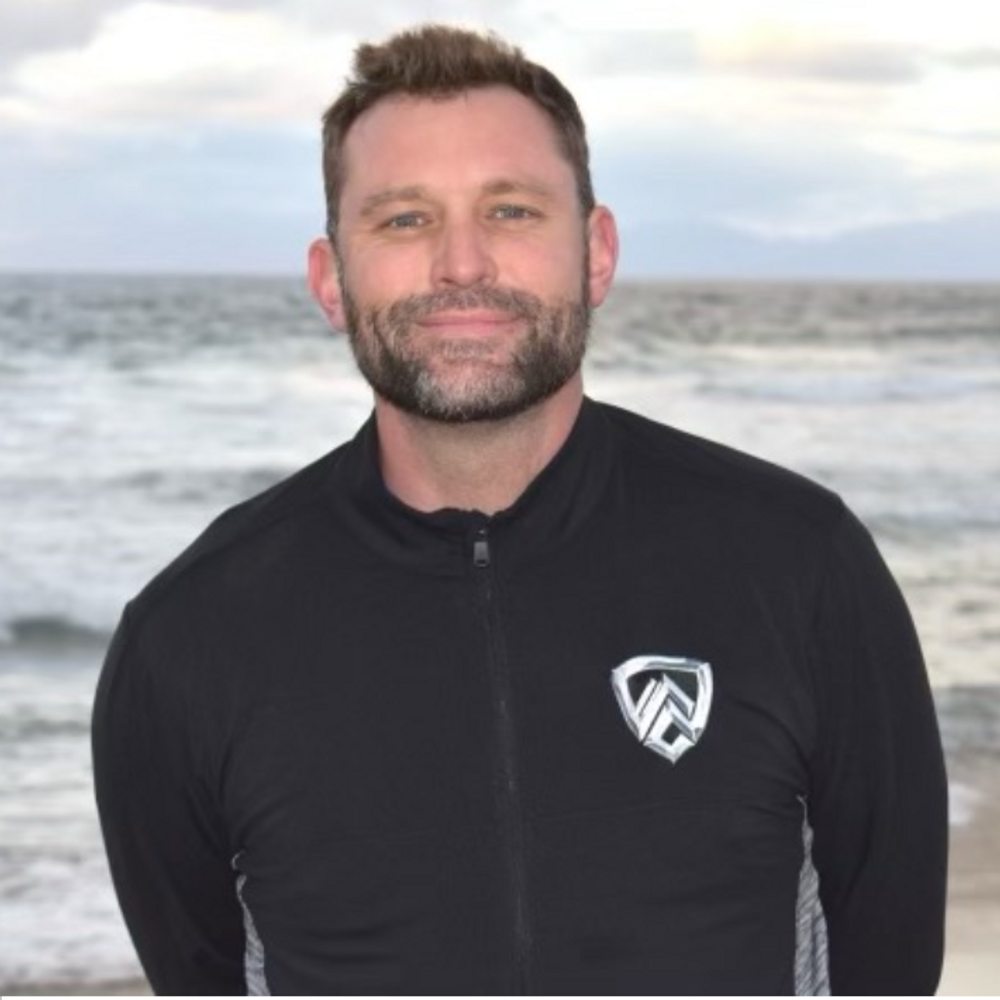
Written by Tynan Mason of Higher Grounds Management
When the Problem Is Not Intelligence
Your teenager may understand every instruction you give them.
They know the test is Friday. They know the application closes tonight. They know the laundry has been sitting there for three days. They may even agree, with complete sincerity, that they need to become more organized.
Then nothing happens.
For parents, this becomes maddening because the gap between ability and execution can look like indifference.
But executive functioning includes processes involved in planning, organizing, prioritizing, initiating tasks, managing time, monitoring performance, and completing multistep responsibilities. ADHD can interfere with several of these functions, although executive-functioning difficulty does not by itself establish an ADHD diagnosis. NIMH emphasizes that sleep problems, anxiety, depression, physical conditions, and other factors can produce similar difficulties and require proper evaluation.
Higher Grounds’ Back On Track Digital E-Course gives teens, young adults, and parents practical systems for building structure, accountability, digital boundaries, and follow-through outside professional appointments.
Follow-Through Is a Sequence, Not a Personality Trait
Parents often say:
“She just doesn’t follow through.”
That description is understandable, but it compresses several different abilities into one judgment.
A teenager must notice the obligation, remember it, determine its priority, decide when to begin, resist competing rewards, tolerate frustration, finish the boring portion, and confirm completion.
Failure anywhere along that path produces the same visible result:
It did not get done.
This is why calling a teenager “lazy” provides almost no useful information.
It names the outcome while explaining nothing about the failure.
Higher Grounds Field Observation: Help Can Quietly Become Dependence
Consider a composite family.
A fourteen-year-old continually misses assignments.
His father begins checking the school portal every afternoon. He identifies what is missing, tells his son what to start, removes distractions, reminds him when to take a break, asks whether the work was submitted, and checks again afterward.
Grades improve.
Everyone feels relieved.
But remove the father for three days and the system disintegrates.
The teenager did not acquire an executive-functioning system.
He borrowed one.
This distinction should shape how families evaluate coaching.
A good coach should not simply become a more patient version of the parent.
The objective is to transfer more of the planning, remembering, initiation, and verification back to the young person.
The Higher Grounds Execution Friction Map
1. Locate the Point of Failure
Do not begin with “He needs better executive functioning.”
Find the exact point where action stops.
Does your teen forget?
Misjudge time?
Avoid starting?
Become distracted?
Quit when frustrated?
Complete work but fail to submit it?
Different breakdowns require different solutions.
2. Externalize What the Brain Is Not Reliably Holding
Calendars, checklists, alarms, written routines, visual schedules, and one consistent assignment system are not signs of weakness.
They reduce the amount of information the teenager must hold mentally.
NIMH specifically recommends practical strategies such as consistent routines, writing down assignments and appointments, prioritizing time-sensitive tasks, and breaking large responsibilities into manageable steps.
3. Reduce the Distance Between Intention and Action
“I’ll do it later” is not a plan.
A more useful commitment specifies:
What? When? Where? For how long?
The teenager is no longer promising to “study tonight.”
They are beginning biology at the kitchen table at 6:30 for twenty-five minutes.
Ambiguity gives avoidance room to negotiate.
4. Make Completion Visible
A finished responsibility should have an observable endpoint.
Homework is not complete because the teen worked on it.
It is complete when the required work is finished and submitted.
The backpack is not packed when the teenager intends to pack it.
It is packed when tomorrow’s materials are inside it.
The definition of “done” should not change according to mood.
5. Fade the Adult
This is the decisive stage.
If the teenager needed four prompts last month, can they function with two?
Then one?
Then none?
The question is not merely whether performance improves.
Who is carrying the structure that makes improvement possible?
What Does Research Support?
The research base is substantially stronger for organizational-skills interventions and structured behavioral treatment than for every service marketed under the broad label “executive functioning coaching.”
A meta-analysis of 12 randomized studies involving 1,054 young people with ADHD found moderate teacher-rated and large parent-rated improvements in organizational skills following organizational-skills interventions. Improvements in inattention and academic performance were positive but smaller.
Adolescent-specific research is also instructive. The STAND intervention combines motivational interviewing with parent-teen behavioral treatment targeting organization, time management, planning, monitoring, and home privilege systems. In a randomized trial, adolescents showed improvements across ADHD symptoms, organizational skills, homework behavior, and other functional outcomes, although some gains weakened after treatment ended.
A later analysis of psychosocial ADHD treatments found that improvements in organization, time management, planning, and parent-teen communication helped explain treatment improvement.
That suggests something important:
Follow-through is trainable—but the skill must survive beyond the intervention.
How Should Parents Evaluate an Executive Functioning Coach?
The word coach alone tells you remarkably little.
CHADD notes that coaching remains a broad field without a universal licensing requirement and advises families to investigate a coach’s education, training, credentials, ADHD knowledge, approach, and experience carefully. CHADD also distinguishes coaching from licensed mental-health treatment.
Ask prospective coaches:
What behaviors will you measure?
How will goals be established?
How will I know my teen is becoming more independent?
How are parents involved?
How will prompting decrease?
What training do you have with adolescents and ADHD?
When would you refer us to a therapist, psychologist, psychiatrist, or educational specialist?
A credible professional should be comfortable explaining the limits of their role.
Where Higher Grounds Management Fits
Higher Grounds Management works with young people experiencing ADHD-related disorganization, academic difficulty, poor study habits, executive-functioning challenges, and loss of confidence. Its model also integrates behavioral coaching, mentorship, parent support, accountability, and real-world implementation.
Families can explore Higher Grounds Management when repeated reminders are no longer creating greater independence.
A Wellness Voice feature described Higher Grounds’ model as combining executive-functioning support with family coaching, mentorship, measurable behavioral observation, academic assistance, and in-home or virtual services. The article also highlights the company’s emphasis on moving parents from emotionally reactive decisions toward observable information.
That principle matters enormously in executive-functioning work.
A family should not merely ask:
“Did he seem more motivated?”
They should know whether something actually changed.
Why JJ Bustamante and BCBA-Informed Measurement Matter
Tynan Mason works closely with Jose Juan “JJ” Bustamante, BCBA — Certification #1-11-
9050, reinforcing Higher Grounds’ emphasis on observable behavior and data-informed decision-making.
BACB standards specifically include developing measurable intervention goals, making decisions from data, evaluating intervention effectiveness, and modifying strategies when the evidence indicates they are not working.
For executive functioning, useful measures might include:
Percentage of assignments submitted
Average time from planned start to actual start
Number of parental prompts
Missed appointments
Independent portal checks
Materials forgotten
Tasks completed without rescue
The point is not obsessive measurement.
It is intellectual honesty.
If the intervention is supposed to improve follow-through, follow-through should eventually become observable.
The Whole Family Still Matters
A Forbes feature on family mental-health pressures highlighted Tynan Mason and Higher Grounds’ emphasis on building practical systems inside the home, coaching parents, tracking behavioral antecedents, and helping families develop structures they can eventually sustain with less outside support.
That matters because parents can accidentally interfere with executive-function growth in two opposite ways.
They can provide too little structure and call the resulting failure independence.
Or they can provide so much structure that the teenager never has to develop independence.
The difficult task is scaffolding followed by withdrawal.
Help enough for competence to develop.
Then step back enough for competence to become necessary.
Screens Can Exploit Every Weak Point in Follow-Through
A teenager may genuinely intend to complete an assignment.
Then a notification appears.
One video becomes six.
The task becomes later.
Later becomes tomorrow.
Technology did not create executive dysfunction, but immediate digital reward can exploit difficulties with initiation, sustained attention, and delayed gratification.
Families should decide device expectations before the evening becomes adversarial.
Use Higher Grounds’ Qustodio App Setup Guide to create more predictable monitoring and screen boundaries.
Technology management should support skill development—not become a substitute for it.
When Responsibility Needs to Become Physical
Some clinically stable young people spend so much time negotiating obligations electronically and verbally that responsibility becomes abstract.
Higher Grounds’ The Ranch creates a more concrete environment built around outdoor
activity, physical work, animal care, reduced digital distraction, and shared responsibilities.
A living animal cannot be fed through intention.
A physical task does not complete itself because someone understands why it matters.
Sometimes reality provides unusually clear feedback.
Frequently Asked Questions
Does Executive-Functioning Difficulty Mean My Teen Has ADHD?
No. ADHD is one possible cause. Anxiety, depression, sleep problems, learning difficulties, stress, and other conditions can create similar problems.
Can an Executive Functioning Coach Diagnose ADHD?
Coaching itself does not confer diagnostic authority. Diagnosis should come from an appropriately qualified healthcare professional.
Should Coaching Replace Therapy or Medication?
No. It may complement them. The appropriate combination depends on the teen’s diagnosis and needs.
How Will I Know Coaching Is Working?
Look for fewer prompts, more accurate planning, faster initiation, improved completion, and greater independent recovery when something goes wrong.
What Is the Ultimate Goal?
Not perfect organization.
Ownership.
Higher Grounds Resources
Jose Juan (JJ) Bustamante, BCBA — Certification #1-11-9050 — LinkedIn Profile
Forbes: The Invisible Responsibility — Leaders Supporting Mental Health
References
Bikic, A., Reichow, B., McCauley, S. A., Ibrahim, K., & Sukhodolsky, D. G. (2017). Meta-analysis of organizational skills interventions for children and adolescents with ADHD. Clinical Psychology Review, 52, 108–123.
Sibley, M. H., Graziano, P. A., Kuriyan, A. B., et al. (2016). Parent-teen behavior therapy plus motivational interviewing for adolescents with ADHD. Journal of Consulting and Clinical Psychology, 84(8), 699–712.
National Institute of Mental Health. Attention-Deficit/Hyperactivity Disorder: What You Need to Know.
Behavior Analyst Certification Board. (2022). BCBA Test Content Outline (6th ed.; updated September 2024).
Bent, A. (2026, August 17). Higher Grounds Management: Bringing a data-informed approach to family behavioral support. Wellness Voice.
MacArthur, H. V. (2025, December 18). The invisible responsibility: Leaders supporting mental health. Forbes.
The Goal Is Not Better Reminding
A teenager can borrow organization from a parent, teacher, coach, or app for years.
Eventually, however, life stops supplying someone to stand beside them.
The real work of executive-function development is therefore not creating a perfectly managed teenager.
It is gradually transferring management itself.
Good support does not merely help a young person finish today’s assignment. It helps build the person who can recognize tomorrow’s responsibility and begin before someone has to ask.


Comments